
How to Reduce Email Bounce Rates Using Seamailer’s Verification Feature
Email marketing works beautifully when your messages actually reach people. But when bounce rates creep up, whether from outdated leads, invalid emails, bots, or poor list hygiene, the entire system breaks down. You lose performance, you lose conversions, and in the worst cases, you jeopardize your sender reputation.
For marketers, startup founders, creators, and SMB owners, email bounce rate isn’t just a metric, it’s a signal. A signal that either your list is slipping in quality or that something is blocking your messages from landing where they should.
The good news? If you are using Seamailer, you already have one of the best bounce-prevention tools at your fingertips. Seamailer’s built-in Email Verification Feature makes it easy to clean your list, validate contacts, and protect your deliverability before your campaigns ever go out.
In this guide, you will learn everything you need to know:
- What email bounce rate really means
- Why high bounce rates harm your marketing and sender score
- The difference between hard and soft bounces
- How email verification works (in plain language)
- How Seamailer’s verification feature automatically prevents bounces
- Step-by-step instructions to clean your list inside Seamailer
- Long-term strategies to keep your bounce rate permanently low
Let’s dive in.
What Exactly Is an Email Bounce Rate?
Your email bounce rate is the percentage of emails in a campaign that fail to reach the subscriber’s inbox. In simple terms:
You sent an email → It didn’t arrive → That counts as a bounce.
Two things determine inbox placement:
- The quality of your subscriber list
- Your sender reputation
A poor-quality list triggers bounces. Too many bounces hurt your reputation. And a damaged reputation means inbox placement drops across the board, even for good emails.
A bounce rate above 2% is a red flag. A bounce rate above 5% is dangerous.
But before reducing bounce rates, it helps to understand the two types of bounces.
Hard Bounces vs. Soft Bounces
Think of bounces like messages at the door.
Hard Bounces: Door Permanently Closed
These happen when the email address is:
- Invalid
- Misspelled
- Fake
- Deleted
- From a domain that no longer exists
Hard bounces hurt the most because these emails will never deliver. ISPs view them as a sign you’re not maintaining your list, which is often associated with spammy senders.
Soft Bounces: Door Temporarily Closed
Soft bounces happen when the problem is temporary:
- The recipient’s inbox is full
- The server is down
- The message is too large
- There’s a temporary technical issue
Soft bounces are less damaging, but repeated soft bounces still signal poor list hygiene.
A strong email program eliminates almost all hard bounces and keeps soft bounces manageable.
This is where Seamailer’s verification feature becomes your best friend.
Why High Bounce Rates Are So Dangerous
You may think a few invalid emails aren’t a big deal. But inbox providers (Gmail, Outlook, Yahoo, corporate servers) monitor every sender closely. When they see a spike in bounces, they assume you are irresponsible or worse, a spammer.
Here’s what high bounce rates can do:
1. Lower Sender Reputation
Your sender reputation is like a credit score for email. High bounces tell ISPs you send to bad addresses. This lowers your score.
2. More Emails Sent to Spam
Even valid subscribers will stop seeing your emails because your domain gets flagged as risky.
3. Lower Deliverability Rates
Your deliverability drops whether your content is good or not.
4. Potential Account Suspension
Some ESPs suspend or throttle accounts that exceed bounce thresholds.
5. Wasted Money and Time
Every invalid email wastes resources—especially if you’re paying for list size.
Seamailer helps you avoid all of these problems with one simple system: email verification.
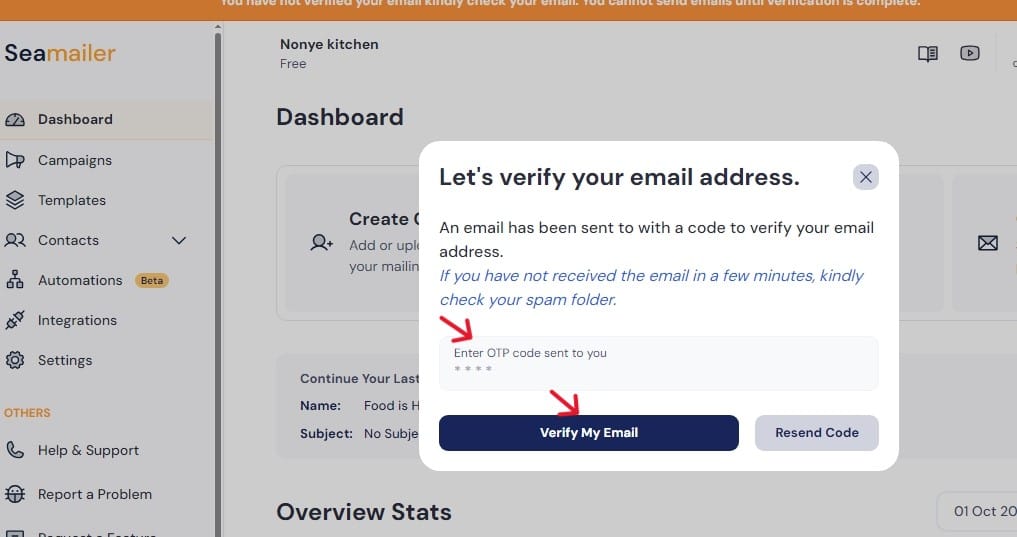
How Email Verification Works (Explained Simply)
Email verification checks whether an email address is valid, active, and safe before you send a campaign. It runs several checks behind the scenes:
Syntax Validation
Looks for typos:
- Missing @
- Misspelled domains (gmial.com instead of gmail.com)
- Invalid characters
DNS & MX Records Check
Ensures the address is attached to a real, active domain.
Mailbox Ping
Connects with the recipient server to confirm the inbox exists.
Spam Trap Detection
Flags addresses designed to catch irresponsible senders.
Role Account Detection
Filters out emails like info@, admin@, support@, these usually bounce or have low engagement.
Disposable Email Detection
Finds temporary email addresses used by bots or low-intent users.
These checks determine whether each contact is:
- Valid
- Risky
- Invalid
And that’s where Seamailer’s verification feature shines.
Why Seamailer’s Verification Feature Is a Game-Changer
Many email platforms require third-party tools (like ZeroBounce or NeverBounce) to verify emails. This means exporting your list, uploading it somewhere else, waiting for results, and re-uploading it.
Seamailer eliminates that hassle.
With Seamailer’s built-in verification:
- You don’t need extra tools
- You don’t need to export/import lists
- You don’t risk data loss
- You don’t struggle with complicated settings
It verifies your subscribers inside your dashboard, fast, reliable, and automated.
Here’s what makes it stand out:
1. Real-Time Verification
When someone joins your list, Seamailer checks their email immediately. This prevents junk emails from ever entering your database.
2. Bulk Verification
You can verify entire lists in minutes, no matter how large.
3. Automatic List Cleaning
Seamailer automatically removes or isolates invalid contacts before you send a campaign.
4. Bounce Prevention Alerts
If a campaign is likely to bounce, Seamailer warns you before you hit send.
5. Protection for Your Sender Reputation
Because Seamailer stops risky addresses early, your bounce rate stays low—protecting your domain health.
Step-by-Step: How to Reduce Email Bounce Rates with Seamailer’s Verification Tool
Step 1: Upload Your Email List
Inside Seamailer, go to Contacts → Import List.
Seamailer instantly scans your list for duplicates, typos, and formatting errors.
Step 2: Run Bulk Verification
Select the list → click Verify Emails.
The system checks all addresses and categorizes them into:
- Valid
- Risky
- Invalid
Step 3: Remove or Segment Invalid Contacts
Seamailer lets you:
- Automatically delete invalid contacts
- Move them to an “Unverified/Invalid” segment
- Flag them for manual review
Removing invalid contacts prevents hard bounces from happening at all.
Step 4: Review “Risky” Contacts
Some emails fall into a gray area, such as:
- Temporary server issues
- Role-based emails
- Catch-all domains
You can choose whether to keep or remove them. Many marketers move riskies to a low-frequency segment.
Step 5: Turn On Real-Time Verification for Signup Forms
Any time someone opts in:
- Seamailer checks their email instantly
- Bad addresses get rejected
- Only valid subscribers join your list
This keeps your database clean from the start.
Step 6: Verify Before Every Major Campaign
High-value sends, like promotional blasts or launch sequences should always be sent to clean lists.
Step 7: Track Bounce Rates in Your Campaign Analytics
Seamailer’s reporting dashboard helps you see:
- Soft bounces
- Hard bounces
- Trends over time
- List health score
Use the insights to clean your list regularly.
Proven Strategies to Keep Bounce Rates Low (Beyond Verification)
Seamailer’s verification feature is powerful, but long-term list health requires ongoing care. Here are sustainable ways to keep bounces permanently low.
1. Use Double Opt-In for New Subscribers
Double opt-in ensures new subscribers confirm their email. It filters out:
- Bots
- Mistyped emails
- Uninterested users
This drastically reduces future bounces.
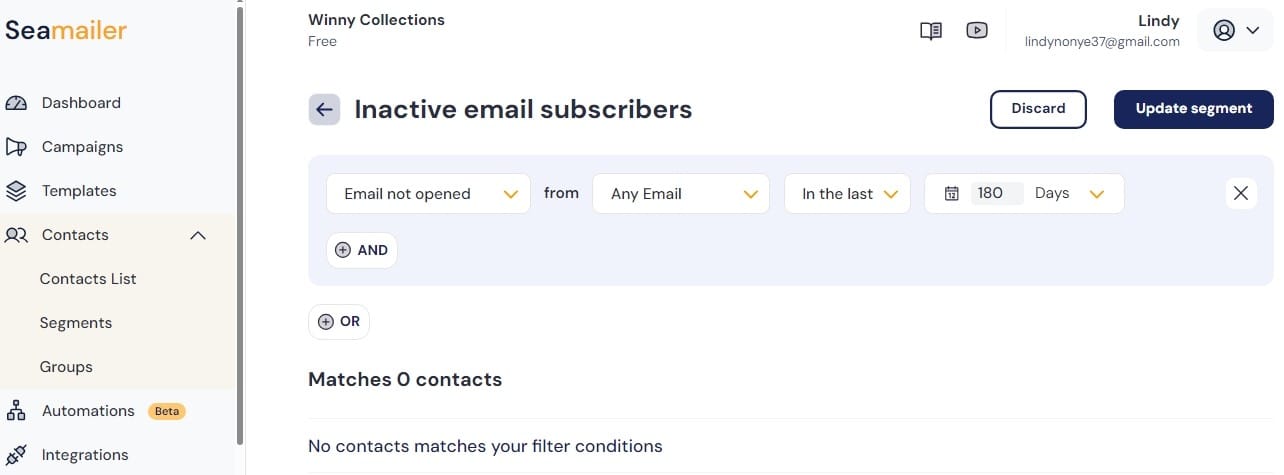
2. Remove Inactive Subscribers
Emails that never engage eventually bounce or harm your sender score.
Create an automation:
“If a subscriber has not opened an email in 90 days → send a reactivation sequence.”
If they still don’t engage, remove them.
Clean lists perform better.
3. Avoid Purchased or Scraped Lists
Purchased lists are:
- Outdated
- Full of invalid emails
- Full of role accounts
- Often recycled spam traps
They are guaranteed to spike bounce rates.
Organic list-building always wins.
4. Warm Up New Domains Before Sending Big Campaigns
New email domains need warming because ISPs don’t trust them yet.
Send small batches first, then gradually increase volume.
Seamailer supports domain warm-up steps.
5. Monitor List Quality During Seasonal Campaigns
Launches, holiday promotions, or big sales can strain deliverability. Before sending:
- Verify your list
- Clean inactive contacts
- Refresh segmentation
6. Use Clean, Noticeable Unsubscribe Links
People who cannot find your unsubscribe link mark your emails as spam. High spam complaints → lower deliverability → more bounces.
A clean unsubscribe option protects you.
7. Build Segments Based on Engagement
Seamailer lets you segment by:
- High openers
- Active subscribers
- Cold subscribers
- New leads
- Click-based activity
Sending relevant emails reduces spam complaints and improves overall deliverability.
Sample Workflow: How a Marketer Uses Seamailer to Cut Bounces by 60%
Let’s walk through a real scenario.
Imagine you run an online store and you’ve grown your list from 8,000 to 14,000 subscribers in the last year.
But your bounce rate creeps from 1.5% to 4%. Your open rate drops. Your inbox placement becomes inconsistent.
Instead of guessing, you log into Seamailer and use the verification tool.
Here’s what you discover:
- 1,200 emails are invalid
- 450 are risky (role-based or catch-all)
- 12 are potential spam traps
- 310 haven’t engaged in a year
You take three actions:
- Delete all invalid emails
- Move risky emails into a separate low-frequency segment
- Send a reactivation campaign to inactive contacts
Your next campaign?
Bounce rate drops to 0.8%.
Inbox placement increases.
Open rate improves.
Your sender reputation strengthens.
This is the power of regular verification.
Why Seamailer Gives You a Deliverability Advantage
Most email marketing platforms focus on sending emails. Seamailer focuses on delivering them.
Deliverability is a science, and Seamailer was built with modern senders in mind:
- Smart verification
- Monitoring tools
- Bounce suppression
- Domain warm-up
- Engagement-based segmentation
- Spam-trap detection
These tools work together to ensure your email list stays healthy and your campaigns keep landing in the inbox not the spam folder.
When Should You Verify Your Email List?
Here’s a helpful schedule to follow:
- Every time you import a new list
- Every time you run a lead-generation campaign (ads, webinars, giveaways)
- Every 60–90 days for list cleaning
- Before important campaigns (launch, Black Friday, product drops)
- When bounce rate rises above 2%
- When you reconnect after long inactivity
Consistency is key.
Common Mistakes That Cause High Bounce Rates (and How Verification Solves Them)
Mistake #1: Not validating emails at signup
People mistype emails all the time. Real-time verification fixes this instantly.
Mistake #2: Sending campaigns to old leads
Contacts from years ago are risky. Verify before sending.
Mistake #3: Using generic lead magnets
Freebies attract low-intent subscribers—many with fake emails. Verification filters them out.
Mistake #4: Not cleaning lists regularly
Seamailer makes list cleaning frictionless. No excuses.
Mistake #5: Importing emails from offline events
Paper forms and spreadsheets contain many errors. Verification cleans them up.
The ROI of Lowering our Bounce Rate
Reducing your bounce rate does more than improve deliverability—it impacts your revenue.
Here’s what you gain:
1. Higher Inbox Placement
More inboxes = more opens = more sales.
2. Stronger Sender Reputation
Essential for long-term success.
3. Lower Cost Per Email
You stop paying for useless contacts.
4. Better Engagement Metrics
Open rate, click rate, and conversions increase.
5. Increased Trust from Email Providers
This protects your campaigns, even during high-volume sends.
When your emails actually reach your audience, every marketing effort becomes more profitable.
Conclusion: Verification is not optional, It’s essential
Email bounce rate isn’t just a number. It’s a direct reflection of your list quality and your reputation as a sender. If you send emails without verification, you are gambling with your domain’s health.
But with Seamailer’s verification feature, you are not just cleaning your list, you are building a system that protects your deliverability, improves campaign performance, and keeps your list healthy long-term.
Whether you are a seasoned marketer, a startup founder, a creator, or an SMB owner, verification is one of the simplest, highest-ROI steps you can take.
If you are using Seamailer, you already have everything you need inside your dashboard. Use it consistently. Clean your list regularly. Protect your sender reputation. And watch your email performance rise.
Your bounce rate will drop. Your engagement will climb. And your campaigns will finally reach the people who want to hear from you.