Why Email Segmentation Increases Revenue (And How to Do It Right)
A few years ago, I ran a small email campaign for an online store. I did what most beginners do: I blasted the same email to my entire list - customers, prospects, and even inactive subscribers. Guess what happened? Open rates were low, click-throughs were abysmal, and conversions were practically nonexistent.
But when I started segmenting - sending personalized messages to people based on their behavior (like past purchases, engagement, or demographics) - the difference was night and day. Open rates jumped by 25%, click-throughs nearly doubled, and revenue saw a 30% lift in just a month.
That’s the power of email segmentation. It’s not just a fancy buzzword; it’s a proven revenue driver. And today, I’ll walk you through why segmentation works, how to do it right, and the best tools to use.
What Is Email Segmentation?
At its core, email segmentation means dividing your email list into smaller, targeted groups based on specific criteria. Instead of treating all your subscribers the same, you personalize your approach.
Examples of segmentation criteria include:
- Demographics (age, gender, location)
- Behavior (website visits, abandoned carts, downloads)
- Purchase history (new vs. repeat customers)
- Engagement (active readers vs. dormant subscribers)
According to Campaign Monitor, segmented campaigns see a 760% increase in revenue compared to non-segmented campaigns. That’s not a typo - 760%!
Why Email Segmentation Increases Revenue
1. Higher Engagement Rates
Nobody likes irrelevant emails. When people get messages that match their interests, they’re more likely to open and click.
According to Mailchimp, segmented email campaigns achieve 14.31% higher open rates and an impressive 100.95% higher click-through rate — proving that personalization isn’t just nice to have, it’s what drives real results.
2. Better Customer Experience
Personalized emails make subscribers feel genuinely seen and valued. Instead of a generic “Hey there,” imagine receiving, “Hi Sarah, we picked these new workout leggings just for you.” It feels thoughtful, relevant, and human — not like a faceless mass blast.
This kind of personal touch builds stronger relationships, boosts engagement, and turns casual readers into loyal customers.
3. Increased Conversions
When you send personalized, relevant offers, people are far more likely to engage—and buy.
For instance:
- A fashion brand can send exclusive discounts on men’s shoes only to male customers.
- A SaaS company can upsell premium plans to users currently on free trials.
Smart targeting creates meaningful connections—and boosts conversions.
4. Reduced Unsubscribes & Spam Reports
Generic email blasts often frustrate subscribers and lead to quick unsubscribes. Segmented campaigns, on the other hand, respect individual interests and preferences, making each message feel relevant and intentional — and that’s why they keep people engaged instead of driving them away.
5. Improved ROI
According to the DMA, email marketing generates an impressive $42 return for every $1 spent. Segmentation takes that even further by directing your efforts toward the most responsive and profitable audience segments — maximizing impact while minimizing wasted spend.
How to Do Email Segmentation Right
Now that we understand why segmentation boosts revenue, let’s dive into how to make it happen — step by step.
1. Collect the Right Data
Your segmentation is only as good as your data. Start with:
- Signup forms (collect preferences upfront)
- Behavior tracking (page visits, downloads, cart activity)
- Past purchases (product categories, average order value)
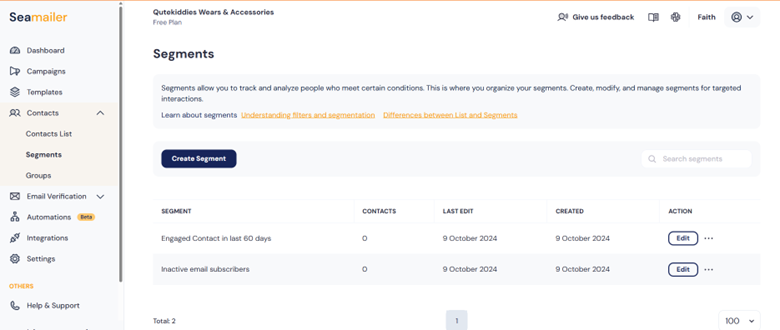
2. Define Your Segments
Here are some proven segmentation strategies:
- New Subscribers: Send welcome emails.
- Engaged Subscribers: Send exclusive offers.
- Inactive Subscribers: Send re-engagement campaigns.
- High-Value Customers: Offer loyalty rewards.
- Cart Abandoners: Trigger reminders with discounts.
3. Personalize Your Content
Don’t just segment - match the content to the group. Examples:
- Send tutorials to beginners.
- Send advanced tips to experienced users.
- Send recommendations based on past behavior.
4. Automate With the Right Platform
Segmentation delivers the best results when it’s automated — and that’s where platforms like Seamailer, Mailchimp, and ConvertKit shine.
They handle the heavy lifting behind the scenes, automatically grouping subscribers by behavior, interests, or activity so every message hits the right inbox at the perfect time.
Comparing Email Platforms for Segmentation
1. Seamailer
- Features: Seamailer delivers advanced automation, behavioral segmentation, and AI-powered targeting—helping you send the right message to the right audience at the perfect time.
- Ease of Use: Built for small businesses, startups, and creators, the platform features an intuitive dashboard that makes managing campaigns effortless, even for beginners.
- Pricing: With affordable, flexible tiers, it’s ideal for startups looking to scale without breaking the bank.
- Pros: Seamailer stands out for its powerful automation, excellent deliverability, and budget-friendly plans that don’t compromise on quality.
- Cons: While its ecosystem is smaller than Mailchimp’s, its focused tools make up for it with simplicity and precision.
- Best For: Perfect for startups, SMBs, and creators who want smart automation without the complexity.
2. Mailchimp
- Features: Packed with pre-built audience segments and seamless integrations for popular e-commerce platforms and CRMs, this tool helps you connect your marketing ecosystem effortlessly.
- Ease of Use: Designed with beginners in mind, its intuitive drag-and-drop builder makes creating campaigns simple, fast, and visually appealing.
- Pricing: Offers a free starter plan with basic features, but pricing scales quickly as your contact list expands.
- Pros: Backed by a massive integration ecosystem and a gentle learning curve, it’s easy for teams of any size to adopt.
- Cons: Costs can rise steeply as your subscriber base grows.
- Best For: Ideal for businesses that value broad integrations and are comfortable investing more for scalability and ecosystem depth.
3. ConvertKit
- Features: Offers tag-based segmentation and creator-centric automation, allowing you to send smarter, more personalized content to your audience with ease.
- Ease of Use: Purpose-built for bloggers, YouTubers, and digital creators, its streamlined interface makes managing subscribers and campaigns effortless.
- Pricing: Includes a free plan for up to 1,000 subscribers, making it a great entry point for growing creators.
- Pros: Exceptionally strong for content-driven email marketing, with tools designed to help creators build loyal audiences and boost engagement.
- Cons: Not as feature-rich for e-commerce workflows or complex automations.
- Best For: Perfect for creators seeking simplicity and audience-focused tools that enhance storytelling and connection.
Real-World Case Studies
- Amazon
Have you ever noticed how Amazon emails you about items similar to those you've browsed? That’s segmentation at scale - powered by browsing + purchase history. - Spotify
They send personalized “Discover Weekly” playlists. This is segmentation based on listening behavior. - Nike
Nike segments by gender, activity, and product preferences. A runner won’t get the same emails as a basketball player.
Common Mistakes to Avoid
- Over-segmentation: Don’t slice your list into too many micro-groups - it becomes unmanageable.
- Not updating segments: Customer behavior changes. Keep refreshing your data.
- Ignoring inactive users: Have a re-engagement plan before you let them go.
Actionable Tips to Get Started
- Start with 3-4 simple segments (e.g., new, engaged, inactive).
- Test subject lines & offers for each segment.
- Use automation to trigger behavior-based emails.
- Regularly analyze performance and refine your segments.
Conclusion: Segmentation Is the Secret Weapon
When I look back at my early days of email marketing, the turning point wasn’t when I sent more emails - it was when I sent better, more targeted emails. Segmentation helped me stop shouting into the void and start having meaningful conversations with subscribers.
Whether you’re using Seamailer, Mailchimp, or ConvertKit, the key is to use segmentation to:
- Deliver relevance
- Drive engagement
- Increase revenue
So, if you’re still sending “one-size-fits-all” campaigns, it’s time to rethink your strategy.
Start small, segment smartly, and watch your email marketing ROI skyrocket.